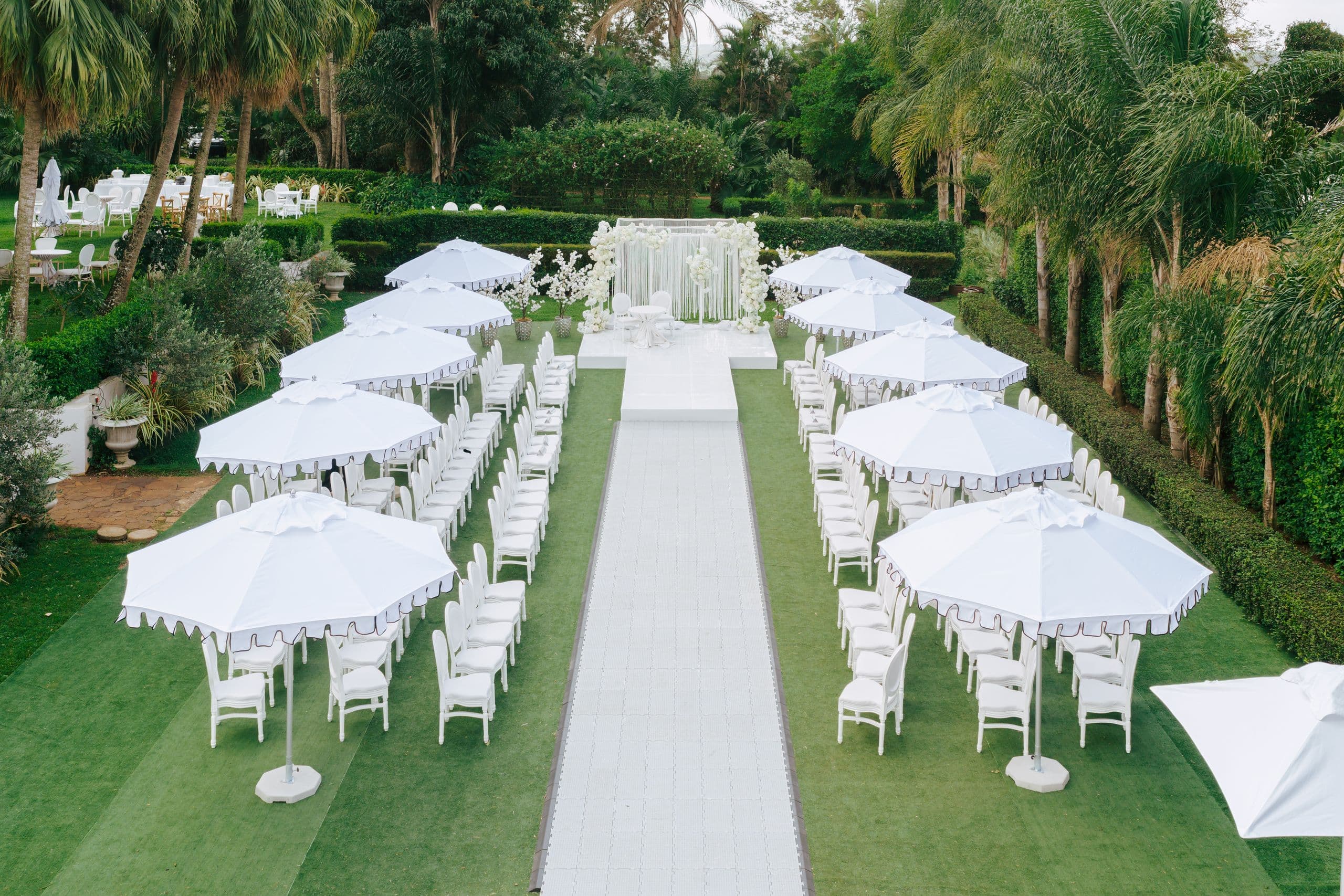
There is a shape that a great many weddings take in this part of KwaZulu-Natal, and it is not the one the wedding magazines describe.
The traditional ceremony happens at the family home. Then, later that day or the following one, the white wedding happens at a venue.
It works because it puts each part where it belongs. The gifts, the elders, the neighbours who have known the bride since she was small: those belong at the house. The long tables, the three hundred guests and the dance floor belong somewhere built for them.
Why families do it this way
The family home is not a venue, and that is the point of it. The traditional ceremony is supposed to happen in the place the family actually lives, with the aunts running the kitchen and the yard full of people who did not need an invitation.
Trying to move that into a function room does not improve it. It just makes it feel hired.
But a home cannot comfortably seat three hundred people for dinner, and nobody wants their grandmother washing dishes at eleven at night.
So the two halves split. And the venue's job is to hold the second half without acting as though the first half was somebody else's business.
The distance question
This is the practical reason the shape works around here. Thembela is about six kilometres from Empangeni and eleven from Richards Bay. If your family home is in or near either town, the drive between the two halves of your wedding is short enough that nothing has to be rushed and nobody gets lost.
That matters more than it sounds. When the drive is long, guests trickle in over an hour, the starters go cold, and the timeline you spent months building falls apart before the speeches.
Planning the two halves together
A few things are worth settling early.
Decide the order and the gap. Same day means a tight afternoon and an early start. Two days means everyone sleeps. There is no right answer, only the one that suits your family and your budget.
Work out who is at both. Often the guest lists overlap but do not match. We need the number for the venue half, and it helps to know roughly how many are coming straight from the house.
Talk about the food honestly. If there is cooking happening at the family home, that is fine and normal. What we need to know is what you want served here, and whether anything is coming with you. Our kitchen is on site and it cooks traditional menus as well as white wedding menus, so we are not precious about it, but we do need to plan it.
Think about the elders. The people who have been standing since six in the morning are the ones who should not be driving anywhere at midnight. There are four rooms and the Villa on the property, and this is exactly what they are for.
Give one person the phone. On the day, the venue needs one number to call that is not the bride's. An aunt, a cousin, a planner, anyone calm. It saves a great deal.
What we will ask you
When you enquire about a wedding with two halves, we will ask which parts happen where, what the guest counts are for each, and what the menus look like. Not to complicate it. To make sure that when your family arrives from the house, the room is already right.
If your wedding is taking this shape, send us your dates and we will tell you what is open. There is more on weddings in Empangeni, and on running both celebrations at one venue.